
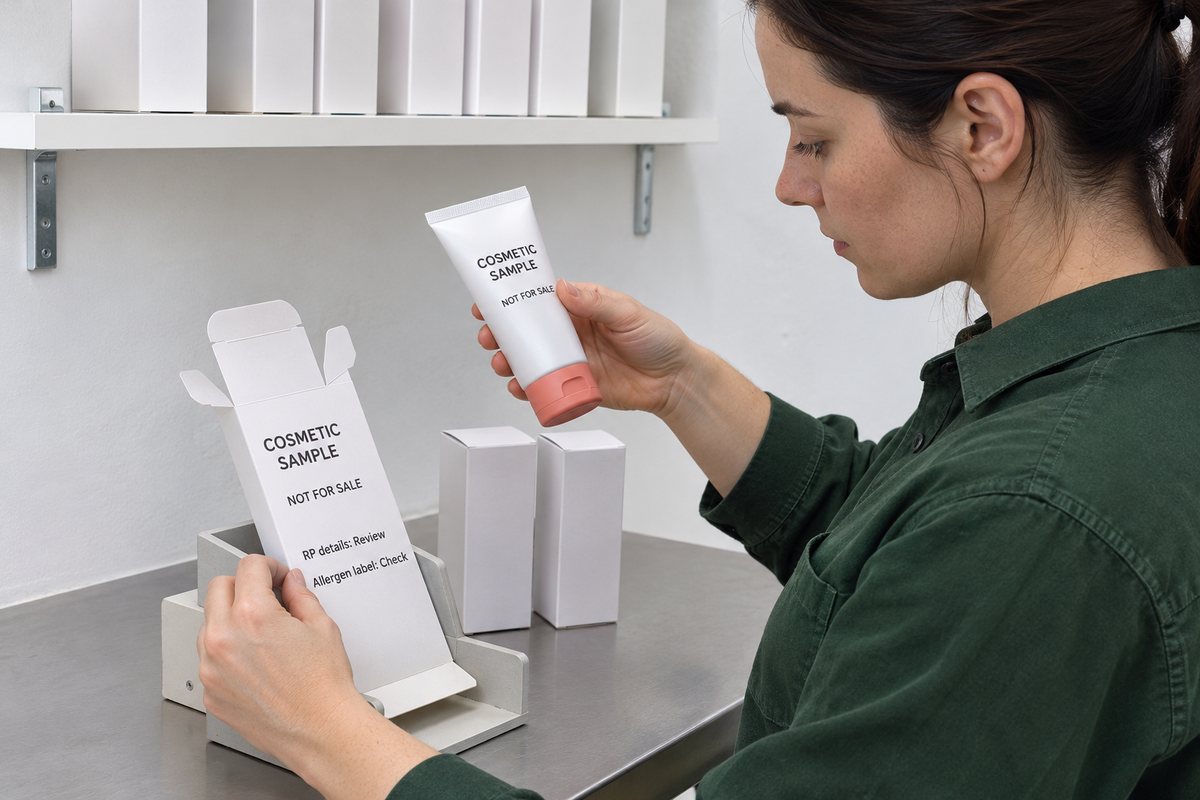
You have found a supplier, chosen a skincare brand and started comparing Irish company formation packages. Before ordering a production run, decide which business will sell the products and who will take responsibility for their cosmetic compliance.
This checklist is for founders considering an Irish LTD for an own-brand or private-label cosmetics business. It also explains why buying finished branded stock for resale is a different starting point. It is a company-setup planning guide, not a product safety assessment or permission to begin selling.
1. Start with the product and supply chain, not the company name
Write a one-page operating brief: what the products are, who makes them, where they are made, whose brand appears on them, where stock will be held and which customers you intend to serve. Include the proposed claims and sales channels. A cosmetic label and an attractive website do not settle the regulatory classification of a borderline product.
HPRA says the requirements apply regardless of business size, including small start-ups. Do not assume handmade production, a short first batch or free commercial samples create a general exemption. Get specialist confirmation of the product category and applicable requirements before committing to packaging or advertising.
Use this brief when speaking with the manufacturer and formation provider. If the factory, warehouse and online seller are different entities, name each one explicitly. This makes it harder for an important task to disappear behind the phrase the supplier handles everything.
2. Separate resale, own-brand production and importing
The responsible person, usually shortened to RP, is the person or entity accountable for product safety and compliance. HPRA identifies own-brand manufacture, importing from outside the EEA, rebranding and contract manufacture under your own brand as activities that may make you the RP. Buying a familiar formulation does not by itself settle that role.
An RP must be located in the EEA or Northern Ireland and may be an individual or a legally registered company. Where an importer mandates another eligible entity, the arrangement must be accepted in writing. Identify the precise products and parties rather than relying on an informal conversation.
For a resale-only proposal, ask the supplier to identify the existing RP and explain the product's route into the market. If your plans later change to relabelling or your own trade mark, reopen the role assessment before ordering the new version.
| Proposed activity | Question to resolve |
|---|---|
| Resell existing branded stock | Which RP and distributor duties apply? |
| Use a contract manufacturer | Who takes RP responsibility for your brand? |
| Import from outside the EEA | Who is importer and who accepts the RP role? |
| Rebrand or change packaging | Does this change your role and product readiness? |
3. Form the intended operating company deliberately
Agree the shareholders, shares, directors, secretary, registered office and company name before preparing the incorporation documents. CRO's incorporation guidance explains that an LTD can have one director, but that sole director cannot also be its secretary. Director residence and identification requirements still need assessment; a product supplier is not automatically your company officer.
Decide whether the company will own the brand and inventory and sign manufacturing, fulfilment and customer contracts. If a founder already ordered samples or registered a trade mark personally, ask about a documented handover. Do not silently treat a personal purchase as a company asset or assume an account can be transferred without consent.
Give the formation provider an accurate activity description. The company may be engaged in cosmetics retail, manufacture, importing or a combination; describe the actual plan rather than choosing a convenient generic label. A NACE classification is not a product-compliance decision.
4. Commission the actual product evidence
A product information file, or PIF, must relate to the specific cosmetic product. HPRA describes components including the product description, safety report, manufacturing method and evidence supporting claimed effects. It must be retained for ten years after the last batch is placed on the market. A supplier's marketing brochure is not the dossier.
The cosmetic product safety report, or CPSR, is one part of that file. It includes safety information and a safety assessment; Part B must be performed and signed by a suitably qualified assessor. Ask who commissions it, what information the assessor receives and how updates will be handled.
Build these deliverables into the purchasing discussion. Request a product-specific document schedule, responsible contact and review point before production. A file for a different fragrance, formulation or packaging version should not be accepted without specialist confirmation that it covers the version you actually intend to sell.
Manufacturing must also be addressed: HPRA sets out good manufacturing practice requirements and supporting documentation. A low minimum order quantity is a commercial term, not evidence of manufacturing compliance. Ask the qualified product adviser what evidence is appropriate for the proposed supply chain.
5. Treat CPNP as notification, not approval
The European Commission's Cosmetic Products Notification Portal, CPNP, is a free notification system under the Cosmetics Regulation. The RP and, in certain circumstances, distributors submit product information through it. Once notified, a product does not require a further national notification within the EU. That does not remove its other obligations.
CPNP notification is not product approval. HPRA requires the relevant documentation and notification before placing products on the market, but does not issue an HPRA authorisation or certification for that placement. A supplier promising an HPRA-approved launch should explain exactly what evidence they mean.
Agree who makes and maintains the notification for your precise product and brand. Keep its status separate from company incorporation, the safety assessment and the final packaging review. One completed task does not prove the whole launch is ready.
6. Check fragrance-allergen labels against the current dates
For a launch planned in November 2026, the 31 July 2026 placing-on-the-market transition date has passed. New products placed after that date must comply with the updated fragrance-allergen labelling requirements under Regulation (EU) 2023/1545 where applicable. The 31 July 2028 making-available deadline is not a blanket extension for every new brand.
HPRA distinguishes first placement from subsequent supply. Qualifying products placed before the 2026 cutoff have a transition for continued availability until the 2028 deadline. Ask the RP to confirm the exact stock and applicable evidence rather than assuming a familiar formula qualifies.
HPRA specifically warns that rebranding, including a white-label formulation with new branding, may count as a new product being placed on the market. CPNP notification alone does not establish placement. Do not rely on a supplier's old notification date to justify a new label; obtain a current, product-specific assessment before printing.
7. Do not treat a registered office as an RP service
The address used for company correspondence and the address arrangements supporting cosmetic compliance have different purposes. HPRA's RP guide explains label identification and making the product file accessible. Before using an address on packaging, have the RP and product adviser confirm the legal and practical arrangements.
Buying a registered-office service does not appoint the provider as RP, give it your product files or turn the premises into a warehouse. Obtain express agreement about any proposed non-company-correspondence use. Do not print a provider's address while its intended role remains unresolved.
Keep the warehouse, returns address, customer-service contact and RP details in a single operating record, with each party's agreed responsibilities. They need not all be the same place, but each must work for its actual purpose. Plan who can obtain records and contact the right person if a product concern arises.
8. Compare two realistic launch briefs
A fictional founder proposes selling an established EEA skincare brand unchanged. The planning brief asks for supplier and RP details, distributor checks, storage instructions, stock traceability and a complaint contact. HPRA's distributor guidance covers checks on labels, transport, storage and traceability; resale is not a no-responsibility option.
Another fictional founder wants the same type of cream manufactured outside the EEA under a new Irish brand. That brief needs a separate importer/RP analysis and product-specific compliance work. The incorporation documents might be similar, while the product preparation and budget are quite different.
Compare written deliverables rather than a single all-in launch price. Allocate funds for formation, specialist product work, packaging revisions, insurance, inventory, fulfilment and accounting. Ask which items are one-off, recurring or triggered by a product change. Keep an allowance for an unsuccessful packaging proof without assuming approval or a fixed launch date.
9. Prepare the company and specialist handover checklist
Keep two readiness lists: company administration and product launch. Give each outstanding task an owner, evidence location and review date. Organise tax and customs advice around actual stock and customer locations; incorporation does not guarantee a tax registration, bank account or payment facility.
After launch, continue the product oversight rather than archiving the supplier conversation. HPRA describes updating the PIF and portal when relevant information or formulations change. Agree a documented route for complaints, safety information and stock withdrawal decisions with the appropriate specialist.
- Identify the intended seller, shareholders, directors and separate secretary where needed.
- Record supplier, manufacturing, import, warehouse and customer countries.
- Confirm the product category, proposed claims and specialist review scope.
- Identify the RP and any required written acceptance for the precise products.
- Agree PIF, CPSR, manufacturing evidence and CPNP responsibilities.
- Obtain current label review, including the applicable fragrance-allergen dates.
- Confirm permitted address uses, file access, storage and returns arrangements.
- Budget for product work, insurance, stock, tax advice and ongoing company compliance.
10. Buy formation support for the company work
Compare the existing formation packages against the directors' circumstances and the specific company tasks required. Confirm the selected inclusions and total payable before ordering. Use a separate engagement for the product work rather than assuming a company package includes a cosmetics launch.
StartCompany.ie does not provide cosmetic safety assessments, PIF preparation, responsible-person appointments, CPNP notification or legal label approval as part of its company formation packages. Formation is not a guarantee that a product, banking application, tax treatment or immigration arrangement is accepted.
Send a concise company-formation enquiry with your activity and director countries first. Avoid sending confidential formulas or personal identity documents in an initial general message. Agree the company scope and any secure verification route before supplying sensitive material.
StartCompany.ie service
Company Formation
Official information and next steps
Official guidance checked on 18 November 2026. Product classification, ingredients, claims and supply-chain roles need qualified case-specific review; this is not a safety assessment, legal opinion or product authorisation.
- HPRA: making, importing and selling cosmetics
- HPRA: responsible person for cosmetic products
- CRO: company incorporation, Leaflet 1
- HPRA: product information file
- HPRA: cosmetic product safety report
- European Commission: Cosmetic Products Notification Portal
- HPRA: fragrance-allergen labelling and transition dates
- HPRA: RP guide, 3 March 2026
- HPRA: distribution and retail sale